
Understanding epoxy resin
Types of Resin Garage Flooring: A Complete Guide
Epoxy, polyurethane, flake, solid colour: What each system actually is, and how to choose the right one for your garage.
All about epoxy
Not exactly sure what the difference between epoxy and resin is?
Considering a garage floor upgrade but looking to understand your options a bit better? You’re in the right place.
Is Epoxy the Same as Resin?
If you've started researching garage flooring, you've probably noticed "resin" and "epoxy" get used almost interchangeably. Unsurprisingly, this may cause some confusion.
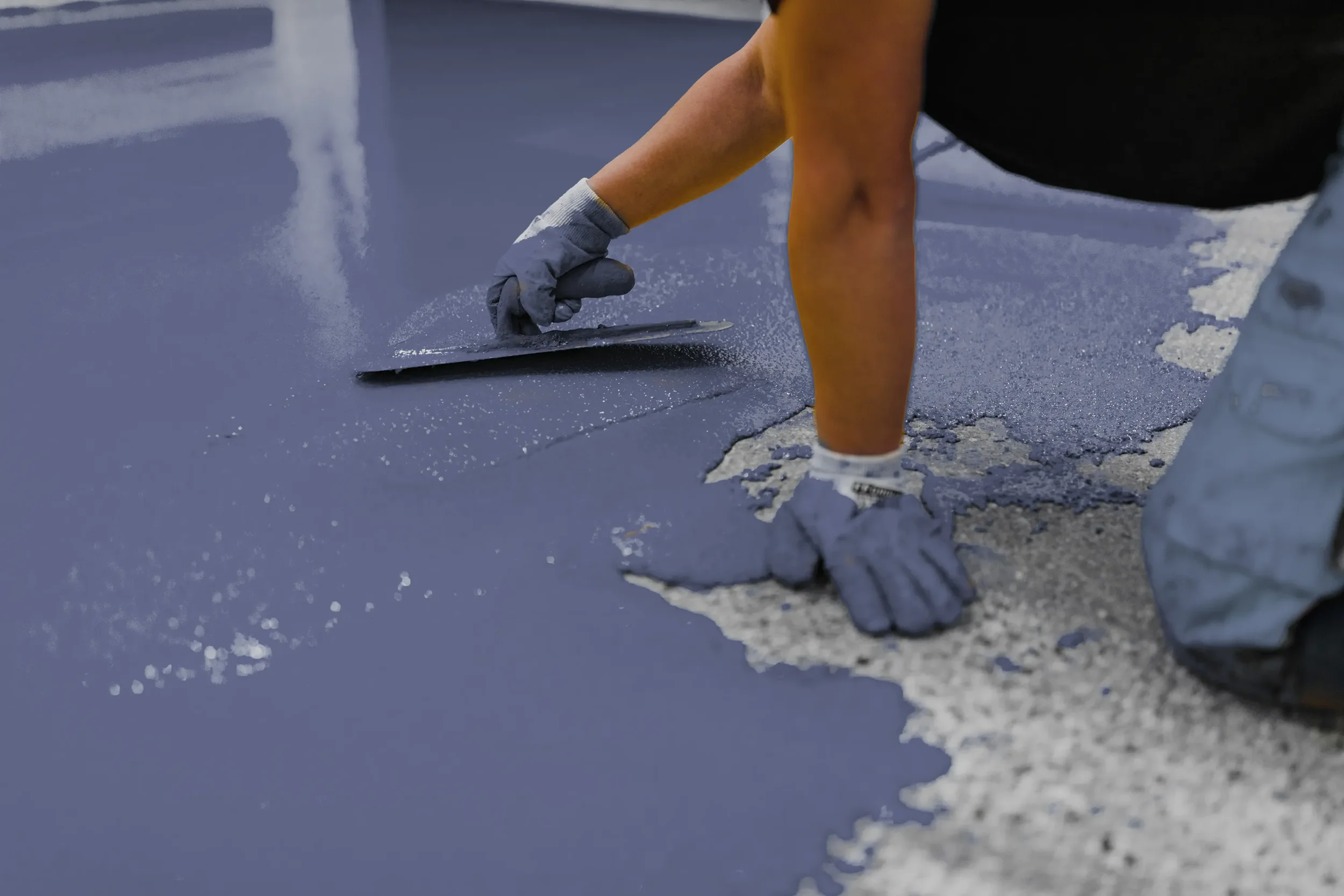
Within the context of resin garage flooring, resin refers to a synthetic liquid polymer that starts as two separate components (a base resin and a hardener/curing agent) which, when mixed together, undergo a chemical reaction and cure into a solid, plastic-like material.
Epoxy resin is a type of resin, just as polyurethane (PU) resin is a different type of resin. The defining characteristic of epoxy resin is that it cures into a hard, solid, plastic-like material that is resistant to oils, fuels, cleaning chemicals, and general wear.
In practice, when most people say epoxy garage floor, they mean a resin flooring system that uses an epoxy resin as its base or build coat. Below, we explain the most popular systems.
Types of Resin Garage Flooring
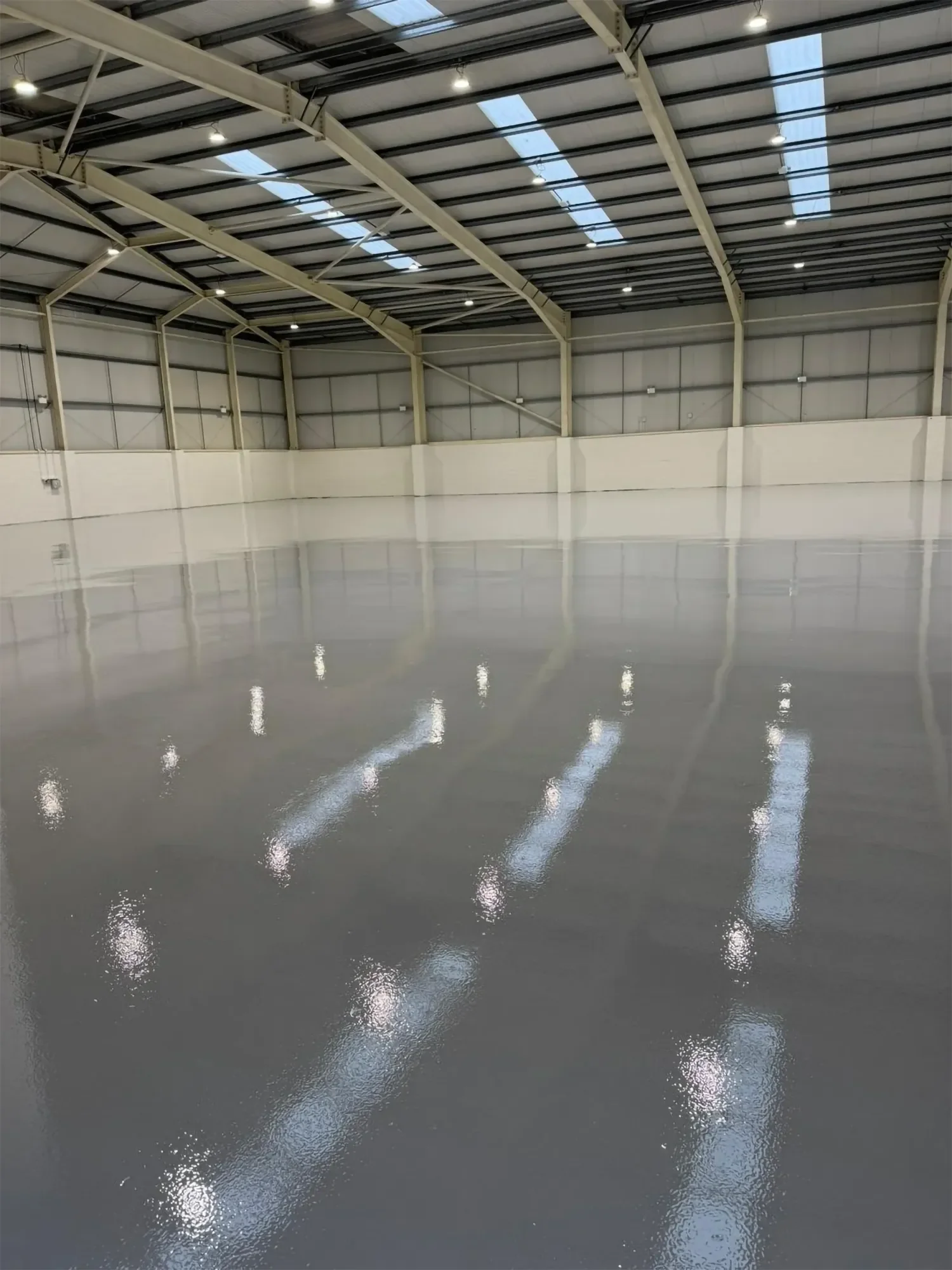
1. Epoxy Resin Coatings
The most popular choice for garage floors, and for good reason. Epoxy resin creates a tough, chemical-resistant surface that stands up well to oil, tyres, tools and general workshop use. It's available in solid colours or as a base layer for decorative flake systems (see below), and offers a strong balance of durability and cost.
Best for: Everyday garages, workshops, anyone wanting a hard-wearing floor without a large budget.
2. Polyurethane (PU) Resin
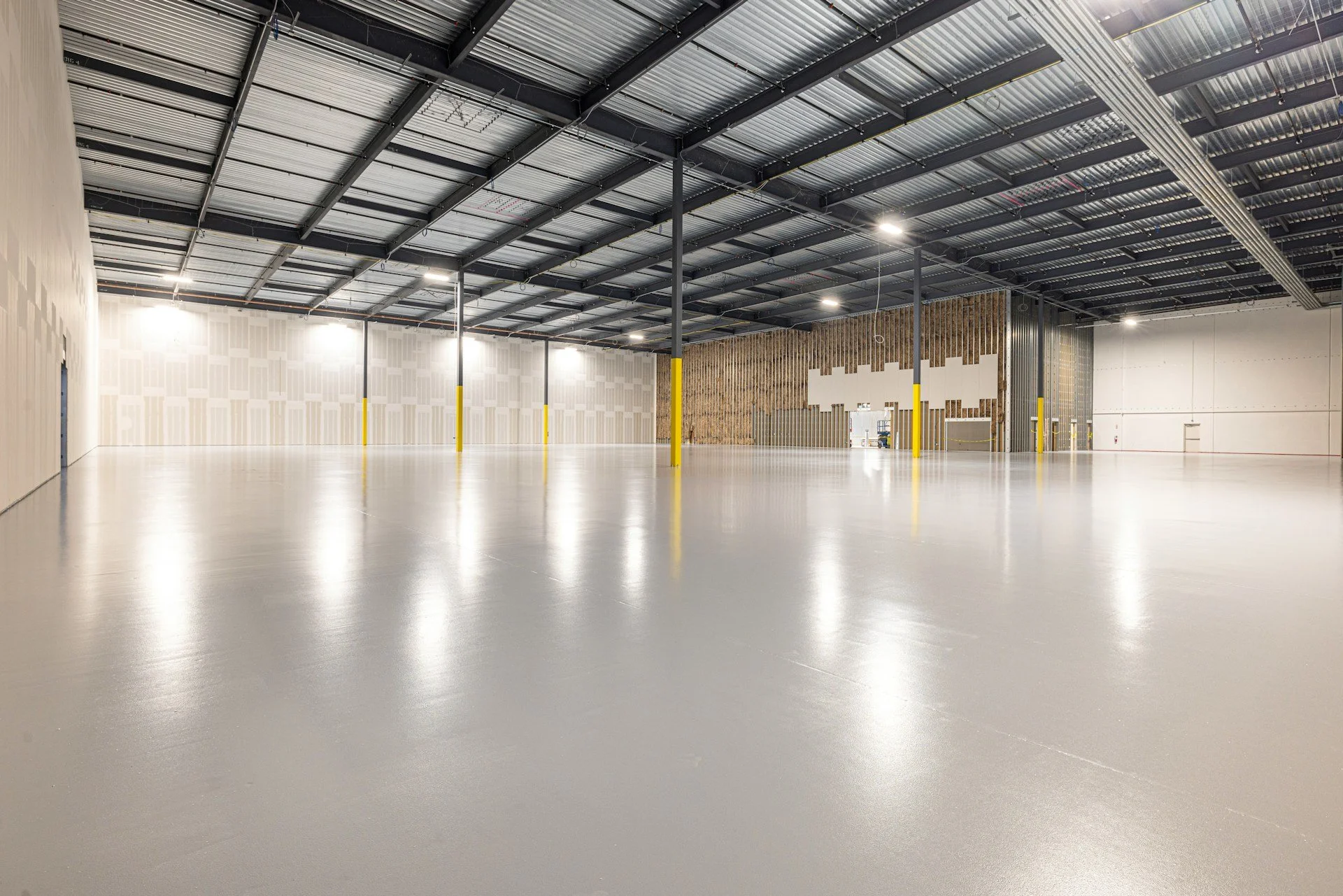
Polyurethane is more flexible than epoxy, which makes it more resistant to scratching and better suited to floors that take a lot of foot traffic or minor impact. It's often used as a protective topcoat over an epoxy base rather than as a standalone system, combining the strengths of both.
Best for: Garages that double as workshops or hobby spaces with regular tool use.
3. Decorative Flake Systems (e.g. our Domino system)
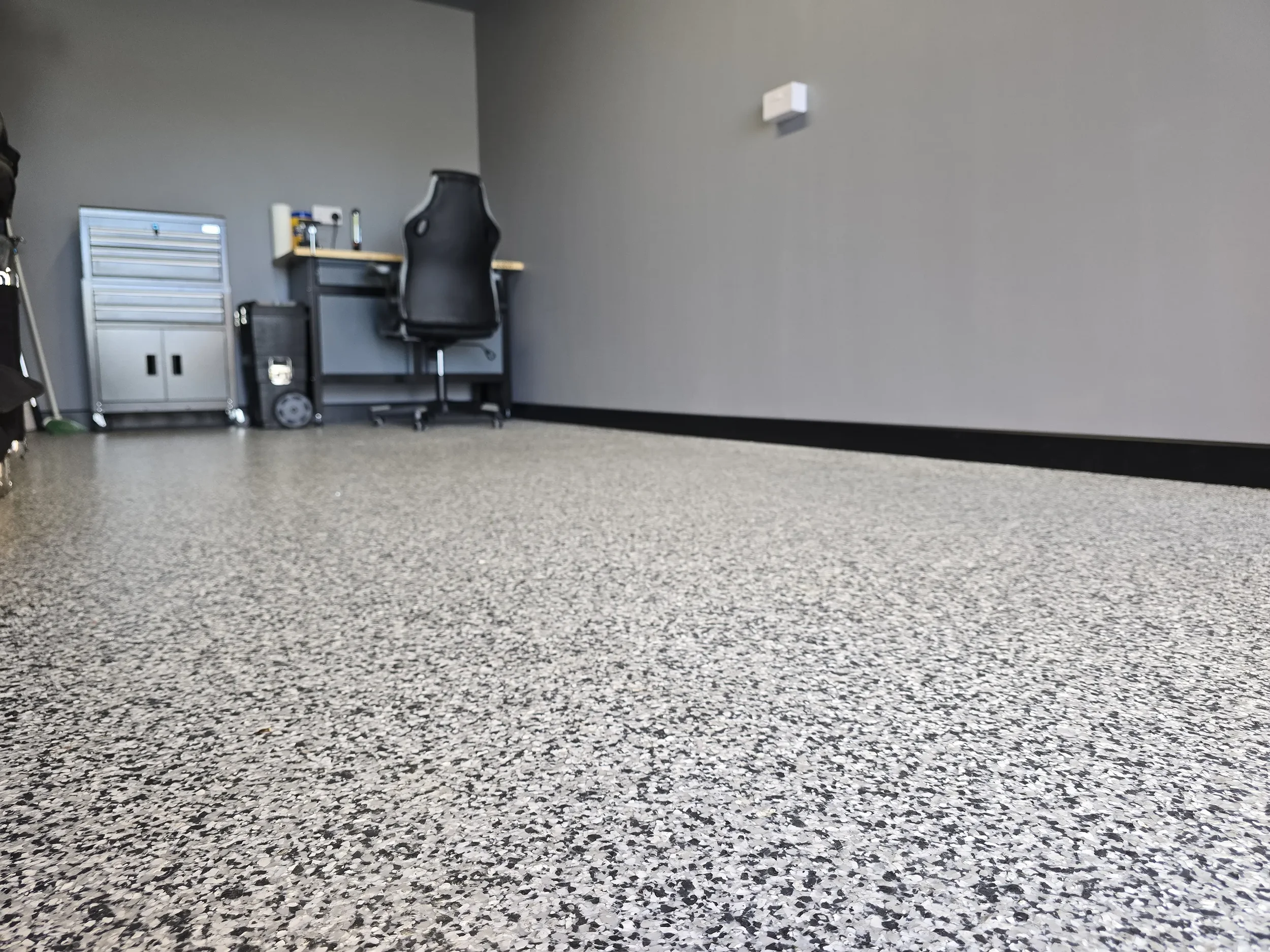
Flake systems use an epoxy or polyurethane base with coloured flakes broadcast across the surface before a protective topcoat seals everything in. The result is a textured, multi-tone finish that hides dust, dirt and everyday marks far better than a solid colour — a big advantage in a space that gets as much use as a garage.
Best for: Homeowners who want a higher-end look alongside practical, low-maintenance performance.
4. Solid Colour Systems
A single, flat colour finish — clean, simple, and typically the most budget-friendly resin option. It won't disguise dirt and dust the way a flake system does, but it's a straightforward way to transform a bare concrete floor.
Best for: Garages used mainly for parking/storage where budget is the priority.
| System | Look | Durability | Best For |
|---|---|---|---|
| Epoxy Resin | Solid or flake | High | General garage/workshop use |
| Polyurethane | Usually a topcoat | Very high (scratch-resistant) | Heavy tool/foot traffic |
| Decorative Flake | Textured, multi-tone | High | Disguising everyday marks, higher-end finish |
| Solid Colour | Flat, single tone | Good | Budget-conscious, simple transformation |
How to Choose the Right Garage Flooring System for Your Home
Before you commit to a system for your garage, ask yourself these questions.
-

How is the garage actually used?
Pure storage/parking has different demands than a space doubling as a workshop or gym.
-

What condition is the existing concrete in?
Cracked or heavily damaged concrete may need extra prep work regardless of which system you choose.
-

How important is low maintenance?
Flake systems are notably better at hiding day-to-day dirt than solid colours.
-

What's the budget?
Solid colour epoxy is typically the most cost-effective entry point; flake and multi-layer PU systems sit at the higher end.
-

Still not sure?
Every ResGen installation starts with a proper assessment of your existing floor, so you're never guessing which system suits your situation — we'll recommend the right one based on how you actually use the space.
FAQs
-
No. Epoxy paint is a thin, roll-on coating with limited durability, while epoxy resin flooring is a much thicker, professionally applied system that chemically bonds to the concrete for a genuinely hard-wearing surface.
-
In many cases, yes, but it depends on the extent of the damage. Proper preparation (grinding, filling, sometimes patching) is essential either way, and it's something we assess as standard before any installation.
-
A properly installed resin system can last 15-20+ years with normal garage use, though this varies by system type and how the floor is used day-to-day.
-
Polyurethane topcoats or flake systems tend to perform best in workshop settings, thanks to their scratch resistance and ability to disguise everyday marks and spills.